


Dylan Patel is the founder, CEO, and Chief Analyst of SemiAnalysis, a firm specializing in semiconductor and AI research. His work is publicly regarded by Jensen Huang (Co-founder, Nvidia), Andy Bechtolsheim (Co-founder, Sun Microsystems), Mark Zuckerberg (Co-founder, Facebook), and many more…
Dylan launched SemiAnalysis solo in 2020, and has since scaled it into a global operation with over 15 experts across five countries. The firm serves an elite clientele including major hedge funds, leading semiconductor companies, hyperscalers, and AI labs. Under his leadership, SemiAnalysis has garnered hundreds of thousands of subscribers and earned frequent citations in prominent publications such as Business Insider.
6th Grade Suspension and a Beating with a Swiffer
A two-lane ribbon of asphalt cut through southwest Georgia, its dusk horizon ruled by the yellow flicker of a VACANCY sign, 24 hours a day. In 2004—in the era between dial-up and broadband—Dylan Patel sat behind the counter of a roadside motel his parents had revived on borrowed caste money.
Dylan’s parents had arrived in America on opposite coasts: his mother in Grants Pass, Oregon, managing a 24-room roadside motel; his father in Los Angeles, scrubbing the bathrooms at a Subway before rising to store manager. A caste acquaintance eventually introduced them at a budget motel in San Francisco, where a two-hour conversation sufficed for an arranged marriage. Pooling every family dollar—and loans from “ten different people in the caste”—they purchased a foreclosed property in rural Georgia.
The young couple, and later their two sons, lived in that motel until Dylan turned ten, rotating through reception, laundry, and the night desk while cousins cycled in to help keep the rooms filled.
Night shift, to Dylan, was freedom: being unsupervised, sitting at a computer while cicadas droned and eighteen-wheelers moaned past on Route 84. On the CRT’s glass he toggled between RuneScape inventories and chip-geek forums—posting, posting some more, and learning how strangers argued.
On RuneScape, Dylan built miniature economies to fund game memberships his parents wouldn’t buy. On forums, he debated Paradox strategy titles, moderated Android and Intel boards, even wrote a script at fourteen to catch suspiciously timed pro-Samsung posts.
On his eighth birthday, Dylan decided he wanted an Xbox. It was a single gift covering both brothers’ birthdays and Christmases—a “long-term” investment by the Patel brothers. But by February, the power ring turned red—with the Xbox thinking it was overheating. A cousin—older, judgmental, already told of Dylan’s new console—was days from arriving. A joint present gone dead would not only bring embarrassment but also ruin the investment of two birthday gifts and two Christmases.
So Dylan scoured forums, trying every non-invasive solution possible before eventually prying off the plastic shell and “shorting the temperature sensor” to allow a few months more usage, as an anonymous post advised.
The ring turned green again. The Xbox lasted through the visit and through spring, until Microsoft finally issued a recall.
The bedroom lights stayed off after dinner so the soft glow of a 19-inch LCD could carry the room. Dylan already knew the math of message boards—“only one in a hundred users ever posts, and one in a thousand holds the ban-hammer”—and by fourteen, he had maneuvered himself into that last decile.
On the Android, Intel, and Nvidia forums, he toggled between an anonymous handle and the straight-up Dylan Patel, scrubbing whichever account risked embarrassing the future adult who might someday be Googled next to “Joseph V. Stalin fan-site.”
He typed fast, skipping vowels (“u” for you, “y” for why) until a stranger refused to “engage if you type like this.” The chastising stung, sharpening Dylan’s keyboard-warrior streak: if syntax mattered, then syntax would be perfected—and every argument would now be won on substance and style.
The first real battlefield arrived when he was choosing his inaugural smartphone. HTC screens versus Samsung cameras versus the shadow presence of Apple—Dylan benchmarked every spec until dawn and defended HTC with missionary zeal. When late-night threads began erupting with oddly timed bursts of pro-Samsung praise, he smelled astroturf. So he wrote a script, watched it flag patterns that no human mod could catch, and silently deleted the shill posts before they reached page two.
The pleasure was less about censorship than proof that a teenager could out-engineer a multinational’s marketing budget.
Those hours soldered a habit: solve the system first, finish the homework later. Leaving the motel for Cairo’s lone public school meant trading the quiet hum of a CRT monitor for the complex social code of a campus that was “55 percent white, 45 percent Black,” and Dylan. He floated between cliques like a neutral piece in Risk: cool Black kids one semester, white football boosters the next, RuneScape nerds whenever the lunch tables reseated. He was an observer, straddling lines but belonging nowhere, an ethnographer taking notes on who to be. Sixth grade was an experiment in finding that fit through friction. It ended with three fights, three wins, and three suspensions: a shove over “yo-mama” jokes with one group, a scrappy scuffle with another, and a broken pair of glasses after a false accusation of Runescape theft. The fights were a way to “stake my claim,” a blunt-force entry into social economies he didn’t yet understand.
Each phone call home from the principal’s office triggered its own escalation. First came the sting of a leather belt, then the sharp rap of an aluminum Swiffer rod once cow-hide lost its deterrent. Finally, after the third suspension, came a school-mandated “anger-management” program, where electrodes taped to his forehead monitored boredom more than rage as a dot drifted across a screen. He learned the lesson, though not the one the school intended: physical altercations were inefficient, a system with diminishing returns and predictable consequences. His aggressions migrated online.
Turning Cheating into a Side Hustle in High School
High school Dylan was just as good at school as he was at fights. He got “all A’s, usually,” a record marred only by a single D earned after he was caught feeding a classmate answers during a final. Cheating was simply a more elegant hack. Freshman year, he discovered the school’s Spanish textbook publisher updated its online answer keys at 1:07 a.m. By homeroom, he had screenshotted verb tables for half the class to earn side money. Sophomore Latin fell just as quickly, then “virtual German” junior year, a district experiment that turned language requirements into downloadable PDFs. “If you cheat, you’re only hurting yourself,” teachers warned. Dylan nodded, then spent his senior spring delivering Quizlet codes via AirDrop. Years later in Medellín he would learn real Spanish at street-vendor speed, proof that shortcuts can coexist with eventual mastery.
Pranks scaled alongside study-hall arbitrage. One Tuesday the cafeteria staff arrived to find every table crowded with water cups—hundreds of translucent barriers that forced students into a single-file maze. Another time he spread a rumor that the state civics exam required a hand-written essay, watching classmates pull caffeine-fueled all-nighters before confessing, “Never mind, I must’ve misheard.” He measured success by panic induced, not damage inflicted; others got detention for checking phones during tests, but Dylan’s record stayed mostly clean, a phantom fingerprint behind the chaos. By graduation, his reputation hovered in no-man’s-land: too clever to pigeonhole, too restless to revere. Friends recalled “the guy who filled the lunchroom with water cups” or “the mod who banned Samsung shills at 3 a.m.” Teachers remembered a student who never missed the point, only the margins. High school merely proved the method; the world beyond Route 84 would test the scale.
Selling Thousands of Dollars of Weed In College and losing out on $100M
College was a different kind of hustle. At the University of Georgia, the social currency wasn't based on who you could out-argue on a forum, but on who knew your name at a frat party. Dylan arrived thinking he was the odd one out, the nerdy younger brother still shaking off the dust of Cairo. He was wrong. His older brother—the one who’d laughed as his friends stuffed him in a trash can in the high school hallway—was “legitimately one of the coolest people” on campus. He was the life of the party, radiating a “regular charisma” that parted crowds. Suddenly, doors opened. “Oh, you’re his brother,” people would say, handing him a red cup, “you gotta come do this or that.” The old dynamic inverted overnight. After years of sibling tension, Dylan found himself looking at his brother with a new kind of awe. He got super close to him, finally admitting what the rest of the world already knew: “wait a second—I’m the pansy. He’s the cool guy.”
This newfound social life had operational costs. The question was the same as it had been on RuneScape: how do you fund the lifestyle? The answer, as always, was arbitrage. It began simply, buying weed and selling it to friends. But campus-level dealing was inefficient, the margins too thin. The real opportunity, Dylan realized, wasn't in the local supply chain but in the digital one. He found the darknet. It was just another forum, a system with its own rules, its own language, and its own exploitable gaps. He started small, buying an ounce instead of a little bit, then scaled.
Soon, packages were arriving, and tens of thousands of dollars were flowing through anonymous Bitcoin wallets. It became a streamlined logistics operation run from a dorm room. The margins were “fantastic,” especially when he started making brownies, turning raw material into a high-value product. He could bake four sheets in a handful of hours, generating “crazy margins” that funded a life of free weed and bottomless party tabs for a widening circle of friends. The thrill wasn't just the money; it was the perfection of the system. Transactions grew from hundreds to “eight, nine thousand dollars” at a time. He was unknowingly sitting on a fortune, a digital wallet whose contents, if left untouched, would one day be worth “fifty, a hundred million dollars.”
But the system had a flaw he hadn't accounted for: his brother. The operation grew too loud, too risky. One day, the life of the party became the enforcer. His brother found out, saw the scale of it, and shut it down. He “kicked my ass and prevented me,” ending the three-month empire with the same finality he used to command a room. It was an act of brotherly protection, a debt repaid for all the years of high school torment. The Bitcoin was cashed out, the party was over, and a nine-figure ghost was left sleeping on the blockchain.
With the darknet venture dismantled, Dylan turned his focus to the final system he had to master: academia. College wasn't that hard; it was just another set of rules to navigate. He drifted through majors, collecting them not out of intellectual curiosity but as a form of strategic hedging. He chose Information Systems, Risk Management, and Analytics—all bullshit, but they were the four majors with the highest job placement rates at his school. He was simply gaming the odds, building a resume that would guarantee a soft landing in the world beyond Athens. He added a Legal Studies certificate just to slow things down, trying to prolong the fun, but the efficiency he'd honed on forums and in backroom deals was hard to switch off. He still graduated a semester early.
Bluffing His Way into a Six-Figure Job
The job hunt was the next logical conquest. After securing a good position, he kept interviewing, a habit born of restlessness. He treated salary negotiations like a bluffing game, tossing out “ridiculous salary demands” just to see who would flinch. Then, someone bit. A brokerage firm in Minnesota, a place he’d only seen on weather maps, met his number. The game was over; he had won. The prize was a plane ticket north.
He landed in a world of alien cold. He was a “rural southern Georgia boy” who had never lived in the snow, now transplanted to a state where blizzards could dump sixteen inches in a single day. The culture shock was absolute. He knew no one. The familiar codes of the South—the slow drawl, the easy nods, the shared understanding of humidity and football—were useless here. To connect, he fell back on a simplified version of himself, a caricature he could perform. He led with where he was from, leaning into the “country bumpkin things” that felt like the only authentic part of him left. He went ice fishing with strangers he’d just met, drilling holes in a frozen lake and staring into the dark water, trying to find an echo of the muddy riverbanks where he’d learned to fish as a child. It was “close enough,” a desperate attempt to map the new terrain with old landmarks.
The job was in insurance, structuring risk for a living, but his own life felt unstructured. The salary was good, the work abstract. Days were spent in a cubicle; nights were a void to be filled. The default setting for a young professional with a good paycheck and no attachments was simple: “oh, yeah, let’s just go party, let’s go drink.” It was a loop of happy hours and weekend benders, a functional numbness that passed for a life. He had successfully hacked his way into the American dream—a high-paying job, a downtown apartment—but it felt like someone else’s code. He was running a program he hadn’t written, and the first signs of a system crash were beginning to flicker on the screen.
The loop ran for years, a predictable rhythm of work-drink-repeat. The numbers on his spreadsheets were clean, the models elegant, but the work felt like arranging deck chairs on a ship he didn't care about. He was doing “fantastic” work, generating millions for the firm, but the rewards felt hollow, the bonuses just more fuel for a lifestyle that was beginning to feel like a cage. He had optimized his life for a specific outcome, and now that he’d achieved it, he found he didn't want it. The system was working perfectly; the user was not.
Then, in early 2020, the system crashed. A long-term relationship ended. His grandmother, the one who had brewed chai for the town sheriff back in Georgia, passed away. He flew to San Diego for the funeral, a fog of grief hanging over him.
Lost in Life After Making Millions
To clear his mind, he rented a bike and rode seventy miles, pedaling until his legs burned, crossing the border into Mexico and back in a single day of punishing sun and wind. He returned to Minnesota just as the world outside went quiet due to the Pandemic. Offices shuttered. The country held its breath.
His brother, now a doctor, called. “Why don’t you come here for like two, three weeks?” It was a lifeline. Dylan packed a bag and flew out, landing in a two-bedroom apartment governed by a new set of unwritten rules. His brother and his fiancée, both from traditional Indian families, navigated a delicate cohabitation. Dylan’s arrival complicated the dynamic. He and his brother, no longer bound by the easy camaraderie of college, began to “confront a lot.” His sister-in-law became the “chill mediator,” a calm center in a storm of fraternal tension.
Days bled together in a haze of shared meals and movie marathons. It was a fragile peace, easily broken. Fights erupted over “fucking stupid shit,” the kind of domestic friction that sharpens when there’s no escape. The angle of a knife cutting strawberries for the French toast he made every morning became a referendum on respect. He was running and working out, chasing a natural dopamine release, but it didn't fix the core problem: he was a guest in someone else's life, sleeping on the couch, generally not happy.
He started watching YouTube videos, scrolling through drone footage of landscapes so vast they seemed to mock the two-bedroom’s suffocating air. A national park. Then another. An idea began to form, a new system to build. “Why don’t I do that?” He ordered a truck tent, a drone, a GoPro. He was building an escape pod, piece by piece, from Amazon. He had a truck back in Minnesota, a relic of his rural Georgia identity. It was time to go home, grab the keys, and drive west, away from everything.
He flew back to Minnesota in late spring. The city was a tinderbox; the smoke from the Floyd riots still hung in the air, a ghost of the fires that had burned just weeks before. He found his apartment ransacked, half his belongings gone. There was no sense of violation, only a strange, clean break. He filed a renter's insurance claim—"hilarious for that reason," he’d later recall—and collected a check that felt like severance pay from a life he hadn't realized he'd quit. He grabbed what was left, threw it in the back of his truck, and pointed the hood west, toward the Badlands.
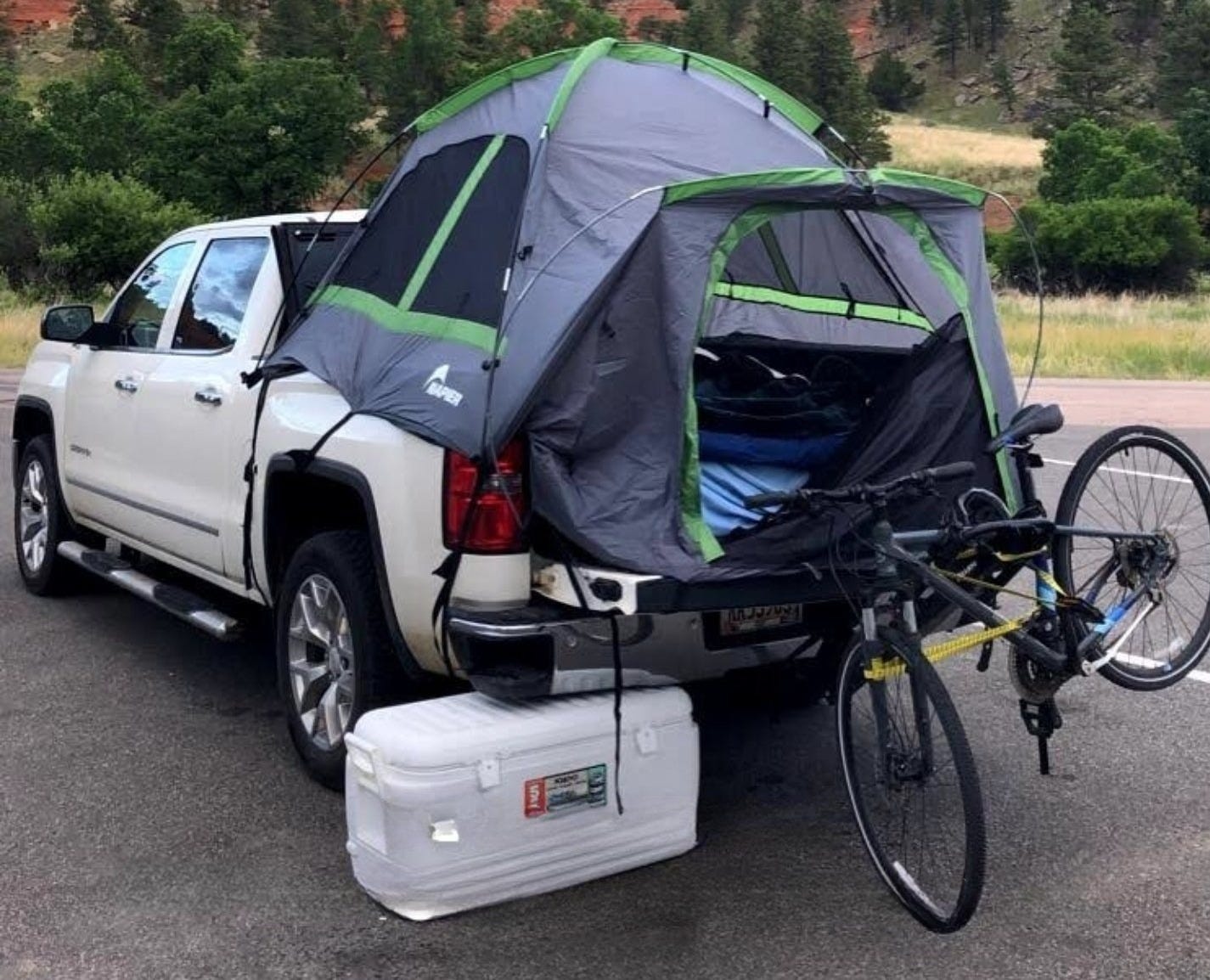
The road opened up. He drove with the windows down, listening to the random country music he grew up on, then switching to the alt-rock and R&B that had soundtracked college parties. He was a free particle, an identity in motion. At a diner in North Dakota, the waitress asked where he was from. When he said Minnesota, the men at the counter nodded knowingly. “You’re running away from the Floyd riots,” one said. It wasn’t a question. Dylan looked at them, a slow smile spreading across his face. “Yes, absolutely.” In that moment, he realized the power of the blank slate. He could be anyone. Out here, on the open road, he found he could just say whatever he wanted, and everyone’s going to vibe. It was magnificent.
He drove from one national park to the next, a nomad chasing sunsets. He hiked for miles, meeting other wanderers on the trails, talking for six, eight hours at a time with people he’d never see again. The solitude was a balm, the vastness of the American West a corrective to the cramped anxieties of the last few months. He was recalibrating, letting the silence and the scale of the landscape strip away the person he’d been.
The journey’s end came without warning. He was on a long hike in Glacier National Park, deep in the backcountry, when a grizzly bear stepped onto the path. It was three feet away, a wall of muscle and fur. The world went silent. The bear turned, looked at him, and for a long, still moment, he saw his life flat, a two-dimensional printout of a story that was about to be erased. He had his hand on the bear spray, his finger on the trigger, but he didn't use it. The bear held his gaze, then turned and ambled back into the trees. It was a primal audit, a sudden, terrifying encounter with a system he could not hack, a force he could not control. He stood there for a long time after it was gone, the adrenaline a cold fire in his veins. He turned around, walked back to his truck, and immediately did not hike anymore that season. He drove straight to Seattle.
He chilled in Seattle for a couple of months, letting the grizzly’s shadow recede. The road trip had cleansed him, but it hadn’t given him a destination. That came from a friend from college, an “indoors” type who had spent the lockdown staring at the same four walls Dylan had fled. “Yo,” the message came, “let’s go to like Argentina or Colombia.” It was a dare, a non sequitur that sounded like a plan. Dylan’s reply was immediate: “sure, let’s do it.” In late January of 2021, they flew south.
Stranded in Argentina After a Stolen Passport
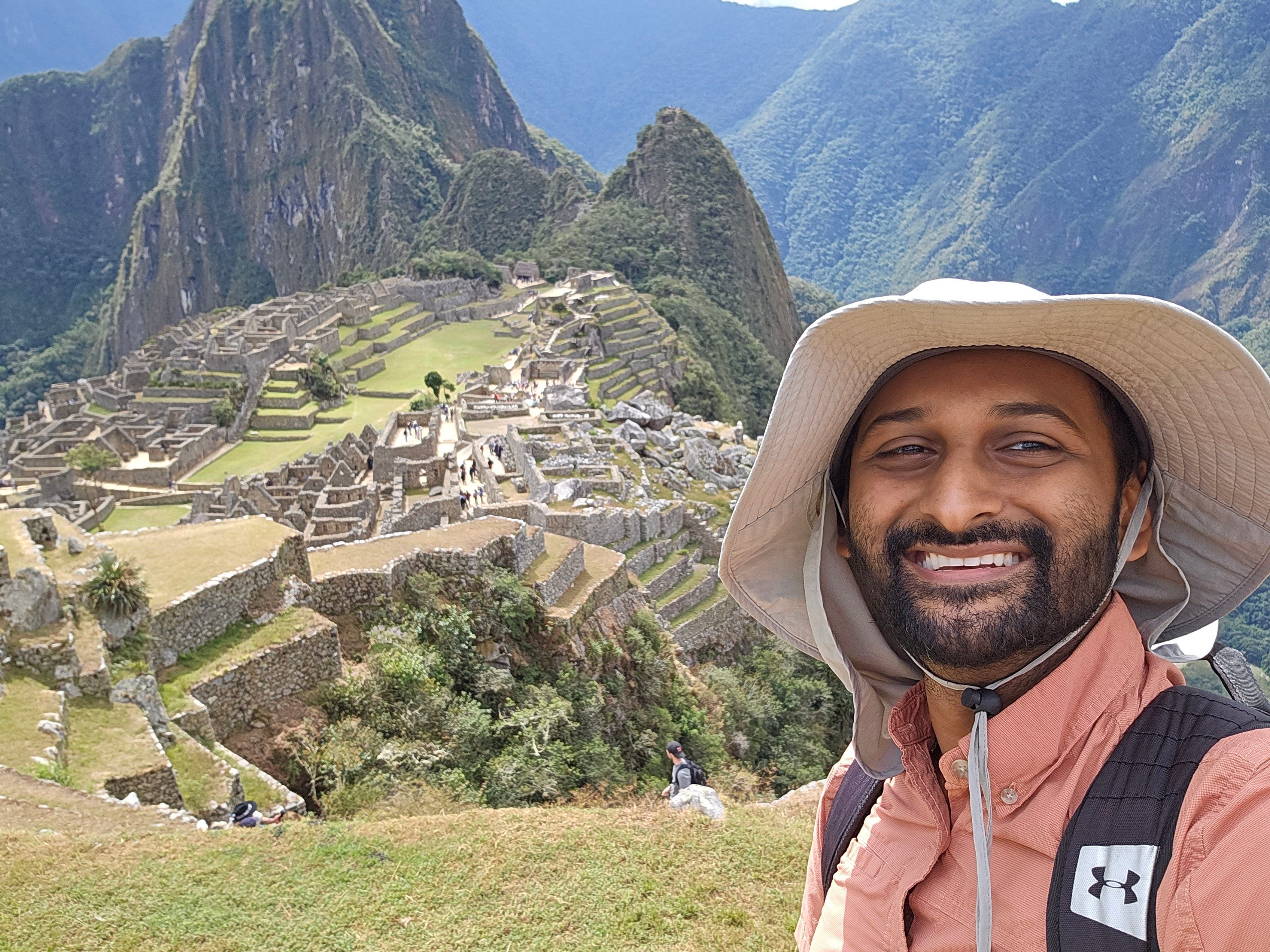
It was a whole different chapter. Latin America unfolded before him, a vibrant, chaotic continent that felt a world away from the manicured anxieties of the U.S. He and his friend explored Latam, and soon Dylan was traveling with a girl he started dating. There were bilingual trivia nights, long bus rides through the Andes, and slow afternoons in coffee plantations. He began to learn Spanish, not from textbooks but from context, from necessity, from the rhythms of the street. He’d cheated his way through three languages in high school, but here, there were no answer keys. He had to listen, to fail, to try again. The Google Translate app was a crutch, but day by day, he found he needed it less.
He was a tourist, but he was also a student, absorbing the cultural syntax of a dozen different countries. He saw the natural beauties—the otherworldly green of the Cocora Valley, the raw power of Iguazu Falls, which he decided was the “most beautiful waterfall in the world,” a force of nature that made Niagara seem like a gift shop with a water feature. He was collecting experiences, building a new internal map of the world. But he was still himself, a systems thinker in a new environment. He noticed the unofficial exchange rates in Argentina, the gap between the pegged currency and the street value, and carried a thick wad of cash that shrank and swelled with the country’s precarious economy.
The travel was raw, uninsulated. He flew economy, stayed in cheap Airbnbs and shitty motels, and used the “Patel Motel Cartel” to get owner’s rates at the few chain hotels he could find. He was an employee of Hilton and Holiday Inn on paper, a ghost in the corporate machine, a status that granted him a few nights of clean sheets and reliable Wi-Fi. It was a life of “young passion, drive, desire, enjoyment,” a novel existence that hadn’t yet lost its shine.
But even the most beautiful road has its potholes. In the wine country of Argentina, his passport was stolen. His flight back to America was in two weeks. The only embassy was in Buenos Aires, a city he couldn’t fly to without an ID. He was stranded, a foreigner without proof of who he was. He had cash, but cash couldn’t buy him a plane ticket. There was only one way out: an eighteen-hour bus ride across the entire nation, a slow, rattling journey toward a bureaucratic solution, and another test of a system he couldn’t control.
For eighteen hours, Dylan was suspended between a past he couldn't prove and a future he couldn't access, the Argentinian landscape scrolling by like a corrupted video file. He was truly tired—not just of the driving, the flights, the constant motion, but of the friction of it all. The freedom of the road had started to feel like its own kind of confinement. He arrived in Buenos Aires, navigated the embassy's sterile corridors, and secured a temporary passport. The document felt like a parole slip. He was free to go, but the question was, where?
After Shedding Digital Anonymity a Semiconductor Giant Invites Him Inside
He kept traveling, but the nature of the journey had changed. The external exploration began to turn inward. In hostels from Bogotá to São Paulo, the laptop came out. While other backpackers traded stories over cheap beer, Dylan was downloading engineering textbooks, reading papers on semiconductor fabrication, and mapping the intricate supply chains that connected a silicon wafer in Taiwan to a gaming console in Ohio. His day-to-day was a study in contrasts: his body was in a new city every few weeks, but his mind was in the cleanrooms of ASML and the earnings calls of Tokyo Electron. He was still the kid from the motel night shift, finding freedom in the glow of a screen.
He started writing. At first, it was just for himself, an attempt to organize the torrent of information he was consuming. Then he started posting, anonymously, on forums—the old instinct. He’d explain the technical comparisons between different chipsets, break down a company's earnings report, or post a theory about a bottleneck in the supply chain. He wasn’t just an observer anymore; he was a participant. Random people would ask consulting things, DMing him with questions. He was building a reputation without a name, a ghost who knew his shit.
The anonymity began to feel like a constraint. He had a point of view, a conviction forged in thousands of hours of obsessive research. So he finally put his name on it. The blog became a public ledger of his thinking, a signal sent out into the void…
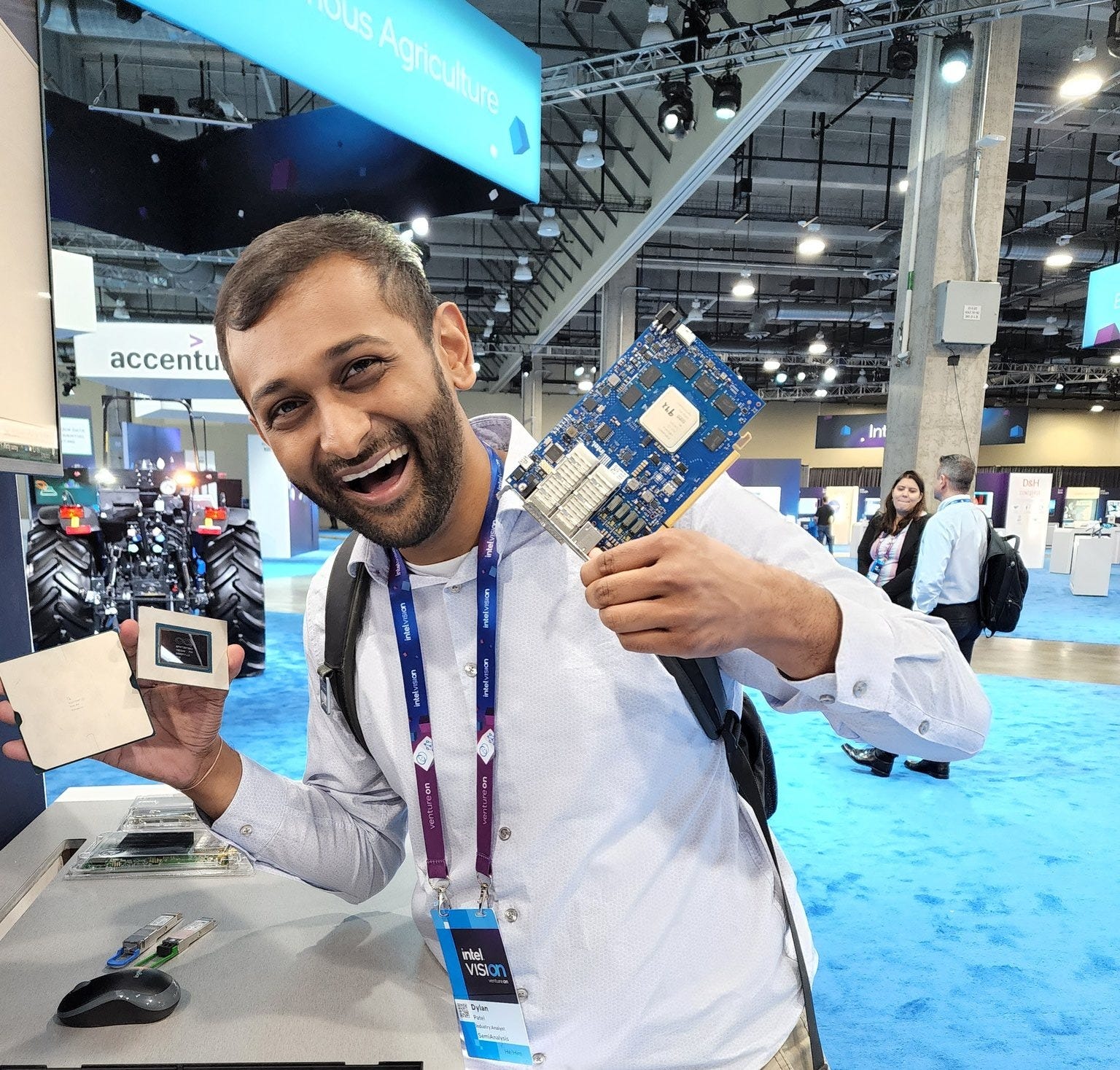
At some point, the void answered. In 2022, an email arrived. It was an invitation from Intel to attend their Vision conference, all expenses paid. It was a summons from the heart of the empire, a recognition from the very companies he’d been deconstructing from the outside. The anonymous moderator from the Joseph V. Stalin fan-site, the kid who’d shorted his Xbox sensor, the traveler who’d spent a year living out of a truck and a backpack, was being invited inside. He booked the flight. The wandering was over. The final frontier was about to begin.
The conference was a disorienting blend of corporate polish and hardcore engineering. He walked through halls of brushed steel and blue-lit logos, a world away from the dusty roads of Latam. He was an anomaly: a young, self-taught analyst in a sea of industry veterans. At first, he was just a “random kid.” He had a blog, a reputation in the digital ether, but in the physical world, he was a nobody. Some people were transactional, their eyes scanning his name badge for a recognizable logo and finding none. They’d turn away, their interest evaporating. “Oh, no, no, you’re nobody.”
But others were different. He found the true believers, the engineers who lived and breathed this stuff. He would ask interesting questions, not about market share, but about the exact intricacies of how a thing worked, why a specific material was chosen, what the real-world failure rate of a component was. No one ever asks with this much enthusiasm. He wasn't networking; he was learning, and his passion was a currency that opened doors the transactional types couldn't see. He’d talk to people for hours, absorbing decades of institutional knowledge in a single conversation.
The Intel conference was a revelation. He realized this was where the real information lived—not just in papers and earnings reports, but in the casual conversations in hallways, the arguments over coffee, the shared language of a tribe. He was hooked. He looked at the calendar of upcoming industry events and saw not a series of conferences, but a map. “Why don’t I go to this conference that’s like two weeks from now?” He didn't need an invitation. He’d just pay to go there.
So began the circuit. From 2022 to 2024, he was a man in perpetual motion, attending forty, then forty-five conferences a year. He went to the big trade shows, but also to the hyper-niche gatherings: a photoresist conference in Japan, where he learned about the photosensitive polymers that were the first step in a chip's long journey into being; an ML conference in Austin; a semiconductor materials symposium in Dresden. He became a familiar face, the young guy who was always there, always listening, always asking the right questions.
He was still living out of a suitcase, but his life had a new organizing principle. It wasn't about wandering anymore; it was about targeted immersion. He’d spend all week at a conference, talking to people, reading the papers, trying to understand the presentations, making contacts. His network grew organically, a web of sources and allies built on genuine curiosity. He was no longer just a blogger; he was becoming an institution of one, a human node in the global semiconductor network, a kid from a Georgia motel who now felt more at home in a Japanese convention center than anywhere else on earth.
The constant travel was a physical grind, but it sharpened his mind. He was cross-referencing insights from a trade show in Taiwan with a paper presented in Munich, connecting dots no one else had the vantage point to see. He was no longer just consuming information; he was synthesizing it, building a model of the industry in his head that was more comprehensive than any single company’s. The blog became a place to test his hypotheses, to put his integrated worldview out into the world and see if it held up under scrutiny. It did.
Consulting requests, which had once been a trickle, became a steady stream. Hedge funds, private equity firms, even the semiconductor companies themselves started reaching out. “Can we consult with you because you’re hosting intelligent things?” It was an inflection point. The obsession, which had been funded by savings and a frugal lifestyle, was now becoming a business. He was making money off it, but the money felt like a byproduct, a lagging indicator of the value he was creating.
He was a solo act, a one-man intelligence agency, but the workload was becoming unsustainable. He needed help. The first hire wasn't sourced from a university or a corporate rival; he was a guy on Discord, a digital ghost Dylan had known for ten years but had never met. He didn't even know his real name, just the handle that would pop in and out of channels, dropping incisive comments and then disappearing. The guy was in Singapore. Dylan sent him a message, a contract, a mission. The one-man shop became two.
The business began to transform. The consulting and paid reports were valuable, but they were services, limited by time and bandwidth. The real asset was the underlying data, the proprietary model of the industry he was building in real-time. He started building data sets, packaging his insights into a product that could be sold, scaled, and updated. By the end of 2022, the business truly flipped. The blog and consulting were the top of the funnel; the data was the engine. Ninety-five percent of the revenue was now from data and consulting on it.
He started hiring more people, pulling them from the same digital ether where he’d found his first employee. They were all over the world—Japan, Taiwan, France, Germany—a distributed team of obsessive nerds he’d met online or at conferences. Vetting was almost all vibes. He wasn’t looking for resumes; he was looking for a specific kind of high-agency passion, the same restless curiosity that had driven him. He’d talk to someone for thirty minutes, and if they were really smart and young, he’d offer them a job. The company grew to twenty-six people, a global network of analysts and engineers held together by Slack channels and a shared obsession. He had built the organization he’d always been looking for, a place where being terminally online was a prerequisite, not a pathology.
A Call from the Founder & CEO of Nvidia
The company scaled, and with it, Dylan’s role began to shift. He was no longer just the analyst-in-chief; he was the CEO, a manager of people and payroll. He started not even working directly with all the people that he’d hired. It was a strange, disembodying feeling. For the first time, he didn’t need to know every single thing about the entire supply chain, top to bottom. He still tried to, driven by the old passion, but the operational reality was that other people could help. He didn't need to go to every single conference, read every single paper, make every single contact. He had built a machine, and now his job was to keep it running.
The top line grew, hitting twenty million, a number that felt both abstract and seismic. The money was real, but it was also a distraction from the work itself. The real measure of success wasn't the revenue; it was the access. He was no longer just a conference attendee; he was a sought-after voice, a name that appeared on the call sheets of the most powerful people in the industry.
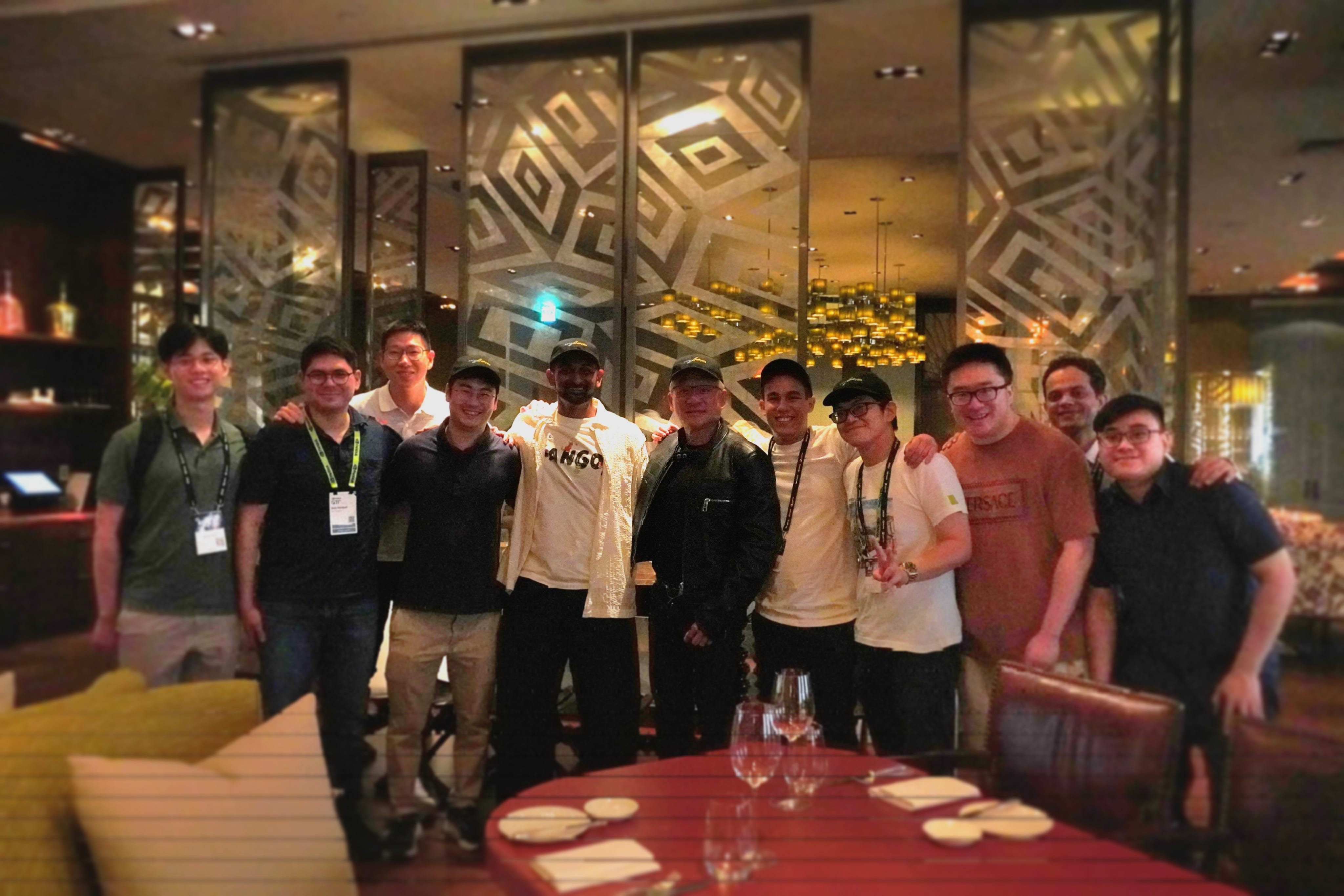
He got a call from Jensen Huang. That meeting, with the co-founder and CEO of Nvidia, was scheduled for fifteen minutes; it went for an hour. He walked into the room and saw the man whose keynotes he’d deconstructed, whose strategic pivots he’d analyzed from afar. And Jensen knew his work, knew exactly what he did. It was a surreal moment of reciprocity, a closing of the loop that had started a decade earlier with a broken Xbox and a desperate search on an anonymous forum.
The interactions with the titans of the industry became more frequent, more direct. Andy Bechtolsheim, the legendary co-founder of Sun Microsystems, who hadn't had a clue who he was the first two times they’d met, now recognized him at conferences, a familiar face bouncing around the circuit. He’d reply to newsletter blasts, sending back two, five paragraphs on why he thought a specific analysis was wrong. It was amazing, surreal to see billionaires actually care what you have to say, or rather what you have figured out.
The viewership of the newsletter, the public face of the company, grew to 200,000, but that was just the top of the funnel, less than five percent of the revenue. The real influence was quieter, more targeted. The memos they produced for clients were distributed through whole companies, their data products used by every major hyperscaler, AI lab, and private equity firm. He was no longer just commenting on the industry; he was shaping its understanding of itself.
But with influence came a new kind of vertigo. He still felt the sting of imposter syndrome. He’d be on a call, advising a CEO of a multi-billion dollar company, and a voice in the back of his head would whisper, why do you care about my opinion? Like you’re new. It was a constant battle to reconcile the kid who had started posting non-anonymously in 2020, without ever having stepped foot in a factory, with the man who now held the attention of the people who built them. But he had the right advice because he had a different viewpoint and vantage. The imposter syndrome was real, but also, whatever. You got to do it to learn.
Remembering the Code
The nomadic years were over. After being homeless for four years, a ghost in airport lounges and hotel lobbies, he finally landed. In early 2023, he officially moved to the Bay Area, a place he had long orbited but never inhabited. The move was a concession to gravity, a recognition that even a distributed company has a center of mass. He found an apartment, bought furniture, and for the first time since leaving Georgia, began the slow, unfamiliar work of building a community.
He started to host things, turning his apartment into a salon for the disparate souls he was collecting. He was an engineer of social situations, mixing friend groups with the same strategic intuition he applied to market analysis. This person should meet this person; they’d hit it off. He brought together artists and semiconductor analysts, VCs and philosophers, building bridges between the Bay Area’s various monocultures. The friend groups were so different, a deliberate curation of interests and perspectives. He found that if you can make a lot of different friend groups, and they have different interests and stuff, that’s really cool.
Life, which had been a series of obsessive, three-month deep dives into hobbies like glass blowing and beekeeping, became a more diffuse exploration. He started taking cooking classes, a nod to the culinary traditions he’d encountered on his travels, but cooking for yourself sucks. He found more joy in cooking for other people, turning a solitary act into a communal one.
His favorite days were the ones without a plan. He’d show up at Dolores Park, hang out with one group of friends, then drift to Alamo Square to meet another. A walk to a coffee shop would turn into lunch at another park, which would lead to a long, meandering journey to the beach as the fog rolled in. He would start the day with one group and end it with another, part of an amorphous blob that just kept going. It was the physical manifestation of the serendipity he had always chased online, a real-world network effect.
He was happy, a state that felt as novel and fragile as his new apartment. The constant motion had been a hedge against a feeling of meaninglessness, a way to outrun the solitary confinement of a life that hadn’t felt like his own. He no longer felt that lack of belonging in the world. He was doing something he loved, surrounded by people he loved, learning and spreading knowledge.
But a new tension emerged. He was now an authority figure on certain topics, and with that came an assumption that his life was as meticulously planned as his analysis. People would meet him and see the public persona—the sharp, decisive founder—and not the man who was still just winging it. He wished everyone kind of recognized that about each other. There was an intentionality to his life now, a clarity of purpose, but it was built on a foundation of throwing yourself out there, of letting things happen, of pivoting quickly when the world presented a new path.
That path often led back to the place where it all began. The story of Jerome Smiley, the town sheriff from Cairo, became a kind of internal compass, a reminder of a world built on something other than data and market dynamics. The beauty of this man was a positive force on his life, a foundational memory he returned to again and again. Cairo wasn't just a dot on a map; it was a complex ecosystem of race, history, and surprising alliances. The town’s demographics, its high fertility of land, its deep roots in the legacy of American slavery—all of it was baggage, a historical weight that shaped the present.
Into this world had come his family, outsiders who learned to integrate by showing up. His dad’s friendship with Jerome was a testament to that, a bond forged over daily cups of chai brewed by his grandmother, who spoke no English, while Jerome spoke no Gujarati. Dylan, as a boy, had been the mediator, translating the simple requests and quiet conversations between two men from entirely different worlds.
Jerome had become a second father, a presence as steady as the Georgia pines. He had invited them to his family’s Thanksgiving, taken them to fish, and even disciplined him with a slap once when he was fucking around with a knife. It was a different kind of authority from his father’s, a different kind of love. It was Jerome who had taught him the redneck life stuff, the practical wisdom of the rural South, but also the deeper, Judeo-Christian morals of doing things right.
When his father spoke at Jerome's funeral, he talked about how Jerome was always about doing it right, rather than cheap—a quiet rebuke to the Gujarati reputation for thrift. He recalled the time they had taken Jerome to India, to their rural village, where the six-foot-five Black man had been a figure of awe and wonder. He had wanted to give money to every person who approached him, his principled, God-fearing heart breaking at a level of poverty he had never seen. It had fallen to Dylan to explain that there were better ways to help, that good intentions weren't always enough. He was teaching the man who had taught him so much, flipping the script, showing him how the world worked elsewhere.
The memory was a touchstone, a reminder that the most important systems are human. It was the story he told himself when trying to make sense of his own improbable journey. It was a story of integration, of translation, of finding common ground in the most unlikely of places. It was the story of a Black sheriff and an Indian immigrant family, a small, quiet alliance against the weight of history, a lesson in how to build a life in a world you weren't born into.
The Pursuit Itself
The years of wandering had been a search for solace, a long, solitary journey to figure himself out. It wasn't about meditation or navel-gazing; it was about understanding how he worked, what he was good at, how to leverage that without becoming overzealous. He’d made many mistakes, moved too fast, said too much, and left a trail of unintended consequences in his wake—with family, friends, relationships, business. The solitude was a dopamine diet, a way to strip away the external noise and understand his own reactions, to learn the architecture of his own mind.
He was learning how to enable different parts of himself, to nurture the creative thinker who could see the patterns no one else did. The solace was the foundation; the serendipity was the structure built upon it. It was about letting things happen, about staying open to the unexpected turn, the random encounter, the sudden insight, and then pivoting quickly, acting on it with the full force of the moment.
He'd had revelations on his travels, moments he called a strike of creative brilliance. They weren't grand epiphanies, but small, sudden clicks of understanding. Oh, I just realized how this part of the supply chain works. This is why this technology works this way. This is why X, Y, Z company from a cultural perspective beats this company. It was the thrill of the model in his head suddenly snapping into sharper focus, of a complex system revealing a hidden logic.
But the revelations were also personal. He’d be sitting in a cafe in a foreign city and a memory would surface of a person who was there for him at a difficult time, someone he’d lost touch with. He'd feel a sudden, urgent need to reconnect, to honor the importance of that bond. It's not that you lose contact with people all the time, but there are always revisits, moments when you realize you need to work more perfectly with your family, or your friends, or yourself. The key was to embrace that realization fully, to act on it right then, before the energy and feeling faded away.
That was the ethos he brought to his life in the Bay Area. He was still seeking knowledge, not for any end goal, but for the pursuit of doing it itself. He would still get obsessed with something because he wanted to do that, to learn about it, to know. The business, the money, the fulfillment—that could come afterwards. It was fine. The real joy was in the moment of actually doing it, the pure, unadulterated act of figuring something out. It was a philosophy honed in the quiet of a motel lobby, tested on the open road, and now practiced in the heart of the tech world, a quiet rebellion against a culture obsessed with outcomes, a relentless focus on the process, the journey, the endless, beautiful work of understanding.