


Heritage
Steve Kerr’s grandfather, Stanley Kerr and his wife Elsa Kerr were American missionaries who met in the Middle East after World War I. Stanley Kerr worked for American, a U.S.-run humanitarian organization, in the Middle East, serving in Aleppo and Marash (modern-day Turkey) in the former Ottoman Empire. Stanley Kerr arrived in the region around 1919 with the goal of helping citizens in the aftermath of what we now call the Armenian Genocide. A period between 1914 and 1923 when the Ottoman Empire killed over 1.5 million Armenians; while the total number of victims differed, it remains one of the worst mass killings in history. These attacks were carried out amid the collapse of the Ottoman Empire and the rise of Turkish nationalist forces led by Mustafa Kemal Atatürk. Years later, Stanley wrote a memoir of his experiences titled The Lions of Marash. In it, he described the brutality of the atrocities inflicted on the Armenian people (mass burnings of churches, drowning, poison injections, toxic gas).
After the violence subsided, Stanley and his wife Elsa settled in Beirut, Lebanon, where they ran an orphanage for Armenian children. They had a son, Malcolm Kerr, who would go on to become the father of Steve Kerr. Malcolm was born and raised in Beirut near the campus of the American University of Beirut (AUB), where his parents were deeply involved in the academic and humanitarian community for 40 years.
Malcolm would meet his wife, Anne Zwicker at the AUB and soon they would have four kids. The Kerrs lived all over the world while their children were growing up in Beirut. Little Steve was a world traveler traveling from Beirut to Cairo, Oxford, South of France, Tunisia, and Los Angeles. In 1982, Malcolm was offered the presidency at AUB.
“We knew the offer was coming,” said Anne. “It was only a matter of time. Malcolm was so right for the job.” (Steve Kerr Article, Chicago Tribune)
But after Malcolm is offered the job, he’s kept in New York for a while... Why? Because the university’s acting president, David Dodge, was kidnapped during the start of the Lebanese Civil War.
University
Eventually Malcolm heads to Beirut to fulfill his role. Meanwhile Steve Kerr was not receiving any D1 offers.
“The scouting services all had me listed as being too slow,” said Steve. Gonzaga was interested, but he had to play against John Stockton for two hours. “I didn’t do very well,” said Steve. “When it was over, the coach, Jay Hillock said to me, ‘It wouldn’t be a problem if you were a step slow, but you were two steps slow.’” (LA Times, Steve Kerr) Stockton would go on to become a ten-time NBA All-Star, holding the NBA records for most career assists and steals. He is a Hall of Famer and the NBA named him “One of the 50 Greatest Players in History”
Others wrote that he was a “Bright Articulate Kid, who’s recruited next one.” (Steve Kerr Article, Chicago Tribune) His high school basketball coach talked the new Arizona coach Lute Olsen into bringing Kerr on as a high character locker room/bench warmer. Lute Olsen, in his first year in Arizona, was trying to rebuild a crippled program. Arizona had gone 4-24 in their previous season. So he gave Kerr a chance. “We were in dire need of a shooter.” Olsen told the media. After Steve accepted the offer from the University of Arizona, he took a vacation to visit his father in Beirut. On the day he was supposed to leave, he and his mother were driven to the airport. “Sitting in the terminal, they listened as the shelling around the airport intensified. Finally their driver told them there was no chance to get out of Beirut that day and drove them from the airport back to the safety of the United States Embassy. Two days later the same driver took (Steve) Kerr on a terrifying eight-hour car ride through Syria to Amman, Jordan. From there, he flew to Tucson to start his college career. Days passed and Kerr learned that his driver had been killed by a sniper shortly after their ride through Syria.” (LA Times, Steve Kerr)
While he was a freshman at Arizona, on January 18th 1984, Steve tragically lost his father at 52 years old. Malcolm Kerr had stepped off the elevator toward his office in College Hall and was shot in the back of the head. The two unknown assailants escaped, It was subsequently determined that Hezbollah was behind the attack. It was broadcast by virtually every major news network, it was front page news. Anne Kerr learned about the shooting while waiting at a campus guardhouse out of the rain for a friend. She ran to the second floor of the College Hall, where she found her husband on the floor.
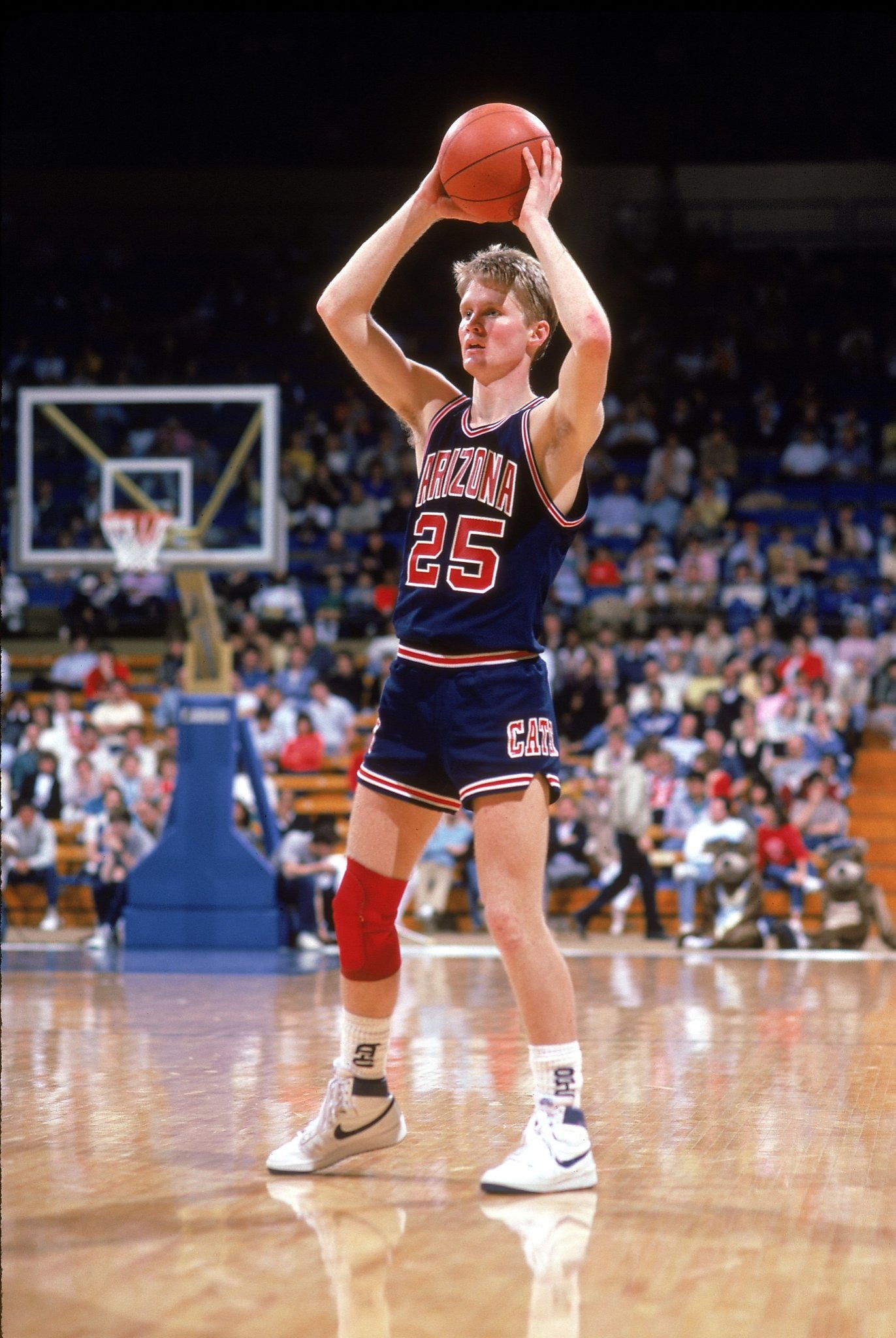
For the next two days, he escaped to the basketball court… Shortly after the incident, Steve Kerr was playing against Arizona State. Playing on the floor of their arch rival Arizona State, Kerr heard the unthinkable coming from the crowd. That was one of many things, by the way, that the Arizona State fans chanted at Steve Kerr. Horrible things. Steve Kerr recounted: “When I heard it, I just dropped the ball and started shaking. I had to sit down for a minute.” Even so, Kerr later took that 4-24 program to the Final Four as a senior. Kerr also held the season 3 point shooting percentage record until Korver took it a couple years ago. His career free throw percentage is above 86. (The New York Times).
Career
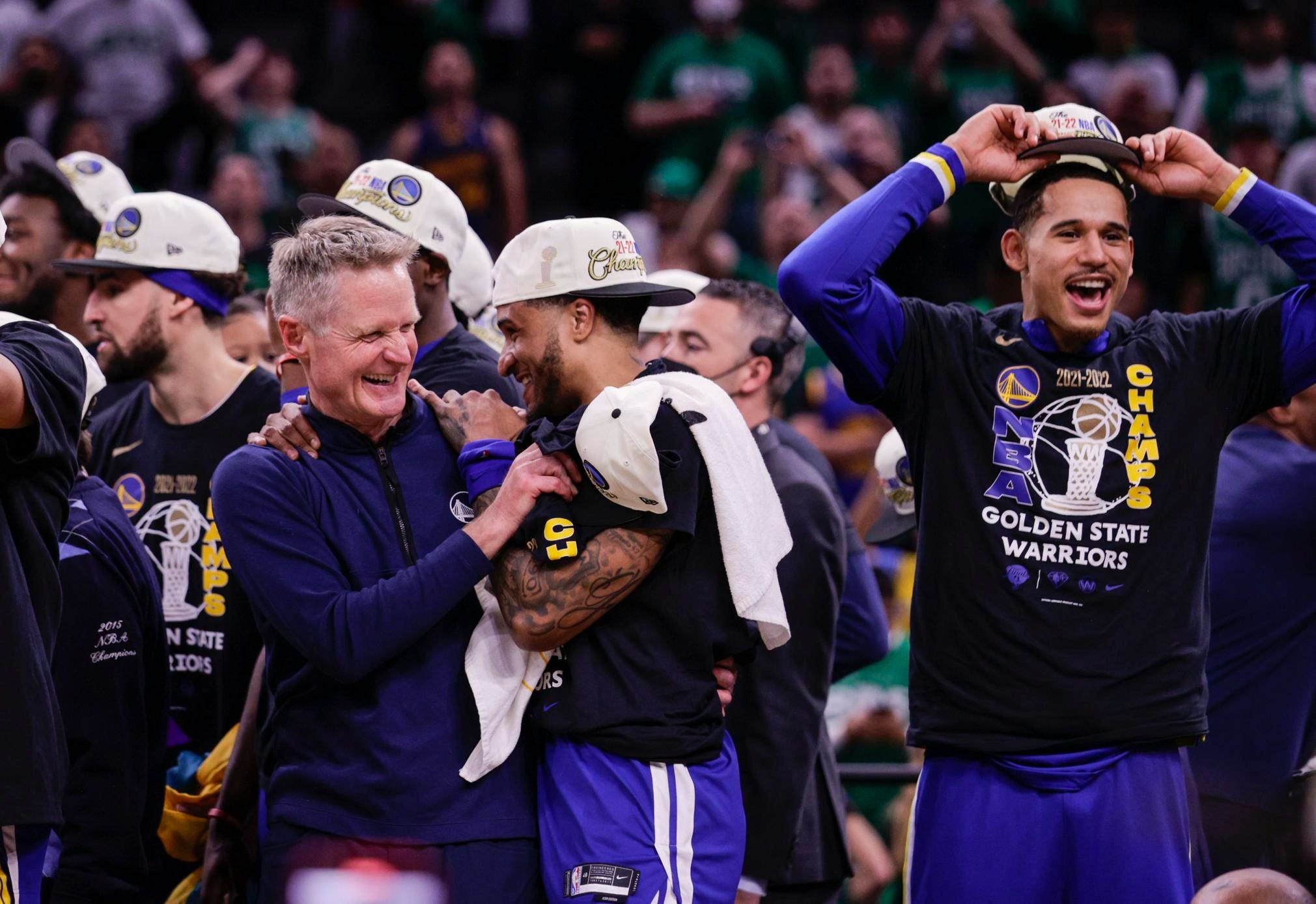
Steve Kerr was born on September 27, 1965, in Beirut, Lebanon. He attended and played basketball at the University of Arizona. During Kerr’s time at the University of Arizona, he helped the team reach the Final Four in the NCAA tournament (1988) and set an NCAA 3-point percentage record (57%). Kerr was selected in the second round by the Phoenix Suns in the 1988 NBA Draft and went on to also play with the Cavaliers, Magic, Bulls, Spurs, and Trail Blazers. Most notably, while playing for the Chicago Bulls, where he helped the team win three consecutive NBA Championships (1996, 1997, 1998). After announcing his retirement from playing, Coach Kerr became a broadcast analyst for TNT (2003) and for the NCAA Tournament and Final Four coverage on Turner Sports and CBA (2011). Later, he joined the Phoenix Suns management (2004) and then became the General Manager (2007). As a coach, Steve Kerr has won 4 NBA Championships as the head coach of the Golden State Warriors (2015, 2017, 2018, and 2022)...
He carried everything that occurred previously in his life with him. At one point in time with the Bulls he got punched in the face by Michael Jordan, but still it proved something to MJ.
Watch his story on their iconic connection in Game 6 of the 1997 NBA Finals: